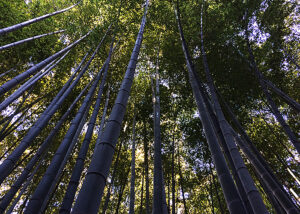
Kamakura Alps
 Lab 鎌倉奥乃院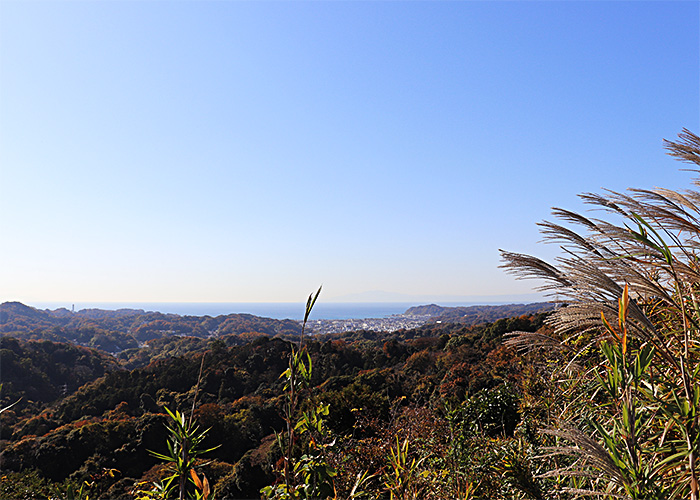
“The Kamakura Alps” by Yasunari Kawabata
There are three main hiking trails in Kamakura. They are as follows:
“Tenen Hiking Trail”
“Kuzuhara-ga-oka and Great Buddha Hiking Trail”
“Gion-yama Hiking Trail”
In addition to these hiking trails, Kamakura boasts a vast number of hiking routes, including those that pass through Mt. Rokkokuken and the “Pilgrimage Trail,” as well as trails that traverse cuttings such as Asaina and Nagoe. If we also include lesser-known routes that pass through Banbagaya and Okura Inari, the total number of hiking trails in Kamakura is truly extensive.
To put it a bit dramatically, you could say that Kamakura is a hiker’s paradise.
Of the three main hiking trails mentioned above, the most prominent is undoubtedly the “Tenen Hiking Trail.” This trail traverses the ridges of the Kamakura Outer Ring Mountains, known as the “Kamakura Alps,” and includes the summit of Mt. Ohira, the highest point in Kamakura City.
Generally speaking, the starting point is at the Hansobo Shrine of Kencho-ji Temple, and the finish line is at Zuisen-ji Temple.
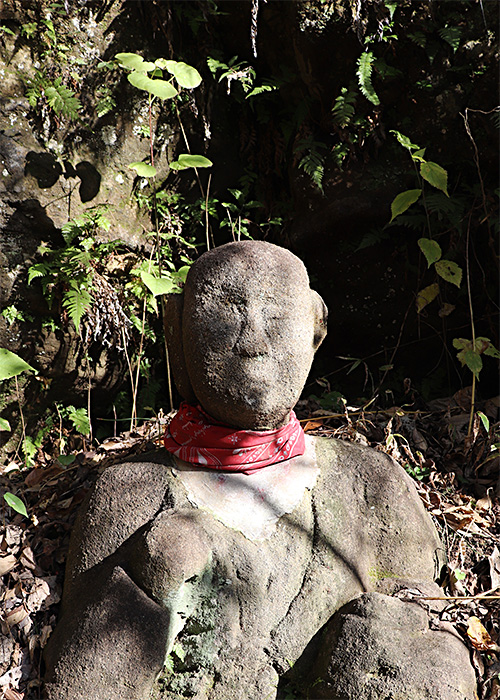
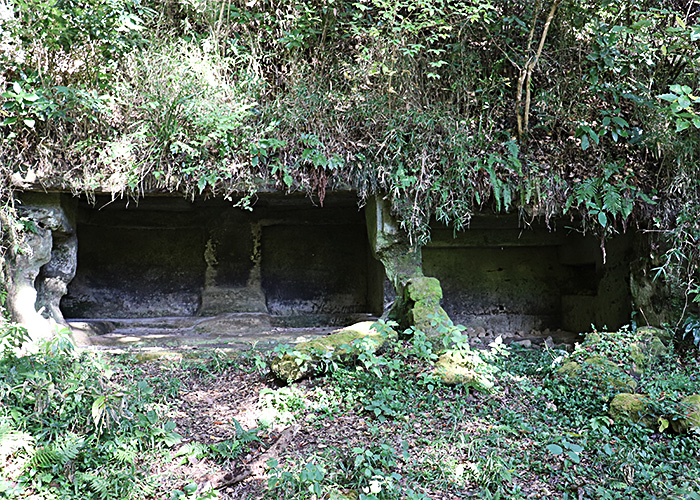
In fact, the “Tenen Hiking Trail” can be viewed as the main route; in other words, quite a few side trails connect to it. For example, the course mentioned above that passes through Banbagaya allows you to visit sites such as “Otonokubo Yagura Caves” along the way, and once you reach the ridge, you are effectively on the Tenen Hiking Trail.
Surprisingly, the Nobel Prize-winning author Yasunari Kawabata was apparently quite the hiker. In his essay “The Kamakura Alps,” he recounts his journey along the Tenen Hiking Trail, eventually walking all the way to Sugita on the shores of Tokyo Bay.
For a long time, I wondered, “Is it really possible to hike all the way from Kamakura to a place like Sugita on the Tokyo Bay side via mountain trails?”
One day, I decided to give it a try by heading into the mountains from the valley where Meigetsu-in Temple in Kitakamakura is located—a side trail of the Tenen Hiking Trail mentioned above.
To cut to the chase, I was able to walk all the way to Kanasawa Bunko on the Tokyo Bay side. And most of the route was along mountain trails.
From Meigetsu Valley to Shōmyō-ji Temple
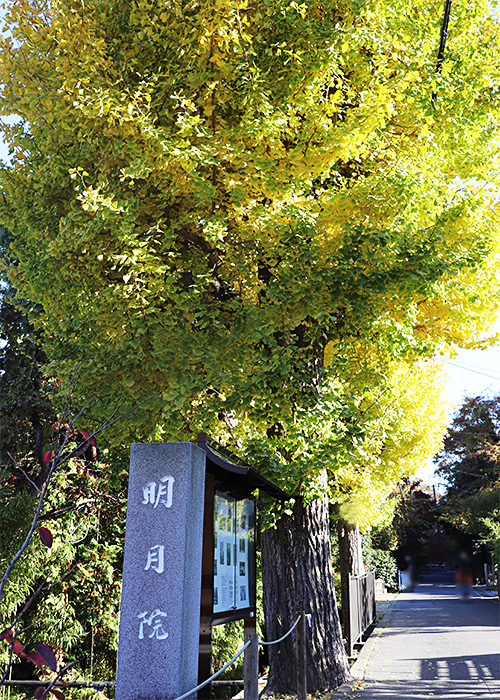
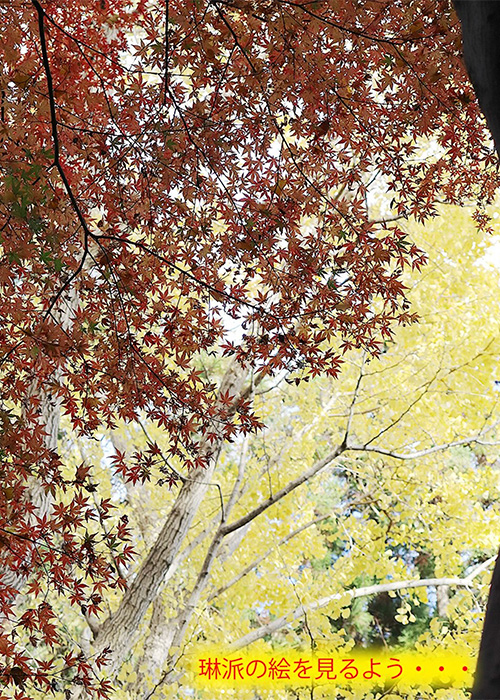
It was a beautiful autumn day, and the ginkgo trees lining the approach to Meigetsu-in Temple were ablaze with golden foliage.
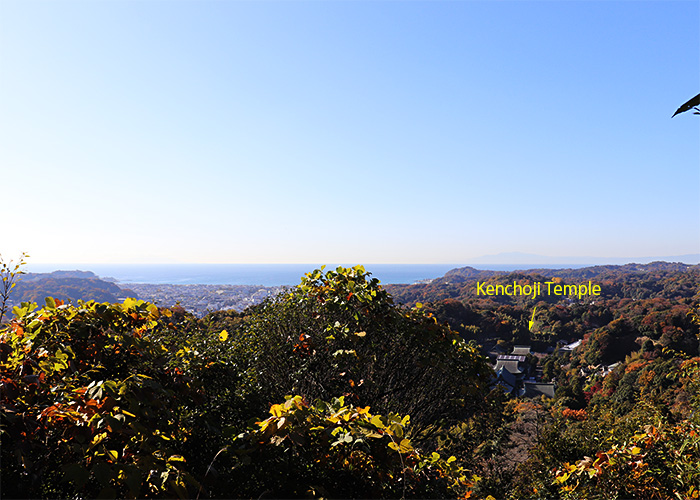
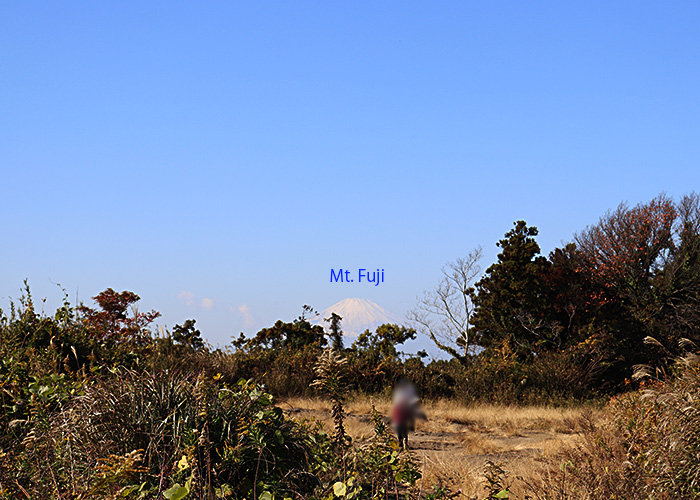
From the observation deck above Hansobo Shrine at Kencho-ji Temple, we could see Mount Fuji spreading out at its base.
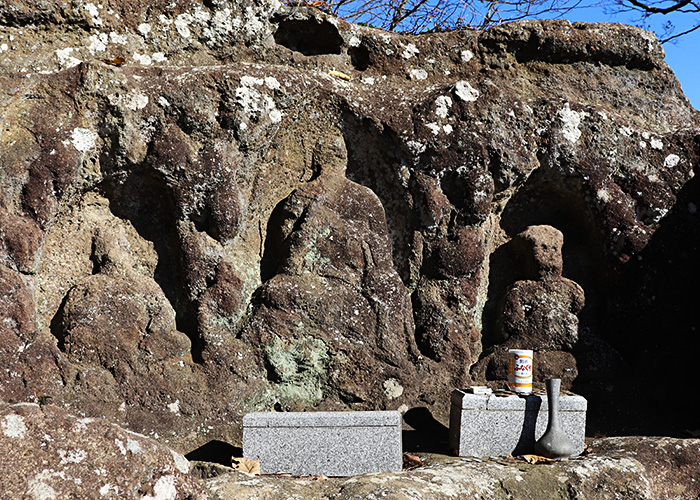
The spectacular view from Jūō-iwa goes without saying. The view from Mt. Ohira, the highest peak in Kamakura, is just as breathtaking.
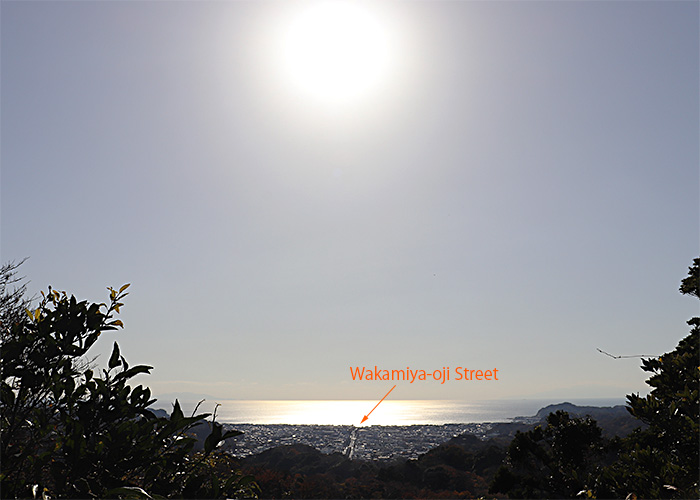
On the mountain path next to the golf course, a woodpecker was peeking out of its nest hole.
The trail splits into two at Tenen. To head toward Kanasawa Bunko, you must not take the path toward Zuisen-ji; in other words, you leave the Tenen Hiking Trail here and follow a different ridge trail. This section is apparently known as the “Shonan Alps.” Along the way, you’ll pass through a cutting other than the so-called “Kamakura Seven cuttings,” cross over the Sobu Tunnel, and then take the right fork at the next junction.
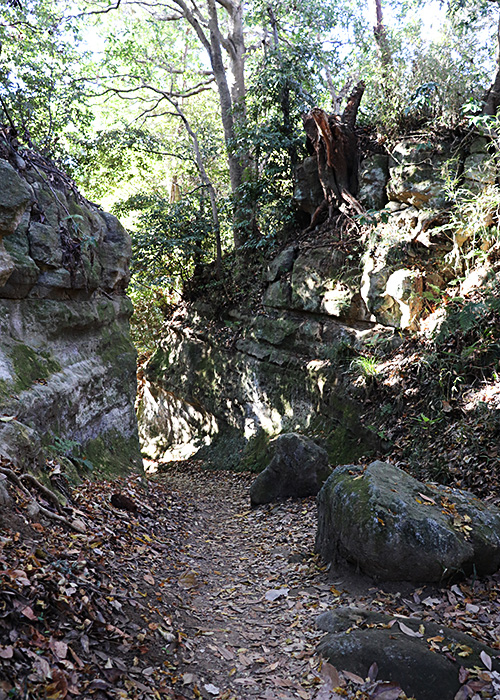
Actually, I’ve taken the path on the left a couple of times, and while it’s quite a rewarding hike (passing through the highest point in Yokohama), it’s also a mountain trail where it’s easy to burn off calories. I’ve even come across a snake slithering across the path. This trail follows the old border between Sagami and Musashi Provinces and is also known as the “Tatara Trail,” the path once traveled by tatara smelters(Iron smelters). The mountain trail continues past Lake Segami all the way to the area around Sakae High School.
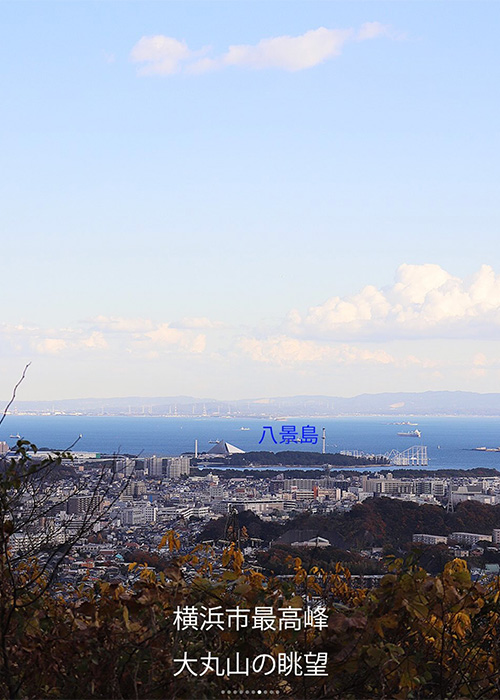
As the path turned into a mountain trail once again, I passed by Nokendai Fudo Pond and the ruins of Nokendo before emerging from the woods. It was just a short walk to Kanasawa-Bunko Station, but since I was already there, I decided to head to Shōmyō-ji Temple. Being a slow walker, I had already been walking for over six hours from Meigetsu Valley to this point, but I pushed myself a little further, eager to see the autumn foliage at Shōmyō-ji Temple.
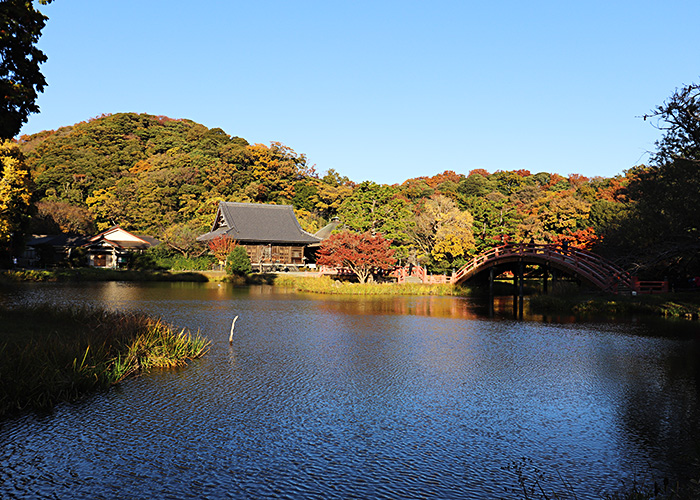
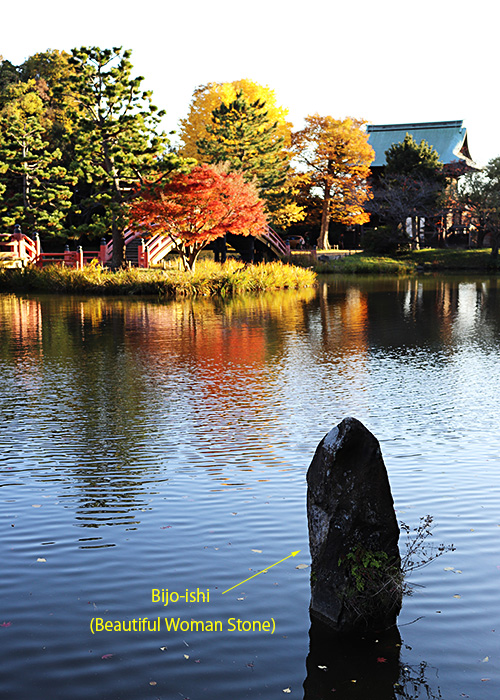
Shōmyō-ji Temple is the family temple of the Kanesawa Hojo clan and is said to be the last remaining valuable example of a Jōdo-style garden in Japan. It has been designated as a National Historic Site.
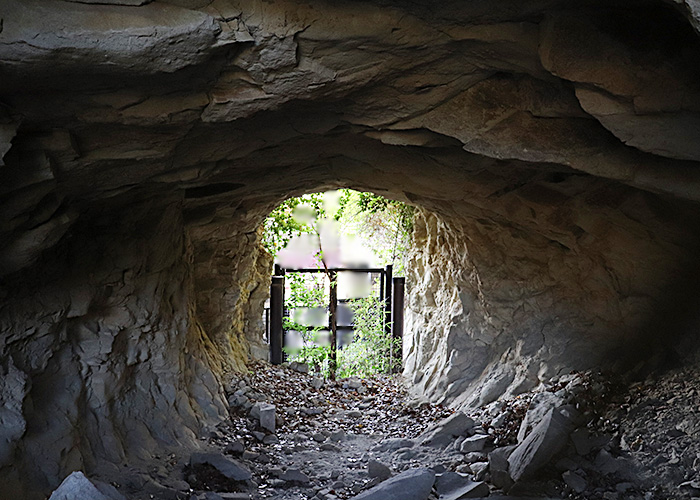
Although the famous “Kanasawa Bunko(The Oldest Samurai Library in Medieval Japan)” is well known, it is said that the site next to Shōmyō-ji Temple was a strong candidate for its location, and that is apparently where you emerge after passing through the tunnel shown in the photo below. This tunnel was built during the medieval period and is considered an important historical site as the passageway that connected the Kanasawa Bunko and Shōmyō-ji Temple.
Right at the very end, I was treated to a breathtaking view of Shōmyō-ji Temple that instantly washed away all my fatigue, making it the first truly wonderful day I’d had in a long time.
A Guide to Easy-to-Read Books on Kamakura
The books below, produced by Lab Deep in Kamakura, provides an accessible introduction to Kamakura from a variety of perspectives.
“The Key to Kamakura” Author:Hisashi Toda
Kamakura is like a green box. Open its lid with the key and explore what's inside! You'll find many stories inside.
This book is an introductory guide to Kamakura. Nevertheless, it reveals Kamakura's multifaceted, mosaic-like nature.
It is an in-depth sightseeing guidebook, and we have included as many photos as possible, making them easy to view.
Table of Contents:
1. Middle Ages
2. Boundary Points
3. Yoritomo (源頼朝)
4. Sanetomo (源実朝)
5. The Great Buddha (大仏)
6. Author
7. Abutsuni (阿仏尼)
8. Yasujirō Ozu (小津 安二郎)
9. Actress
10. Sea
11. Enoshima (江の島)
12. Gardens
If you are considering a purchase, please click the button below.
“KAMAKURA” Author:Yone Noguchi
This is a guidebook to Kamakura by Yone Noguchi(野口米次郎), one of Japan's greatest heroes. However, unlike ordinary guidebooks, it reveals the true face of Kamakura: a city of silence, history, and Buddhism.
Table of Contents:
BY THE ENGAKUJI TEMPLE
THE TEMPLE OF SILENCE
A LEGEND OF THE BUDDHA'S TOOTH
BY A BUDDHA TEMPLE
UNDISCOVERED KAMAKURA
THE WONDER OF BRONZE
BY THE DAIBUTSU AT KAMAKURA
NICHIREN
THE HACHIMAN SHRINE
ENOSHIMA
If you are considering a purchase, please click the button below.
Lab Deep in Kamakura Juei Masuda