
Blog

Minamoto no Yoritomo and Hojo Soun, Heroes Associated with Kamakura
Minamoto no Yoritomo, who established the first samurai government in history, and Hojo Soun, who became the first warlord of the Warring States period. Both of these heroes shared a deep connection to Kamakura and Izu.
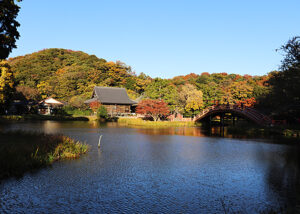
Kamakura Alps
I hiked the “Kamakura Alps” and “Shonan Alps”—trails once walked by Nobel Prize-winning author Yasunari Kawabata—from Meigetsu Valley to Kanasawa Bunko. The hike took 6 hours and 30 minutes. I then extended my walk to Shōmyō-ji Temple, which was ablaze with autumn colors, bringing this beautiful late-autumn day to a close. Kamakura has many hiking trails; to put it somewhat dramatically, Kamakura is a hiker’s paradise.
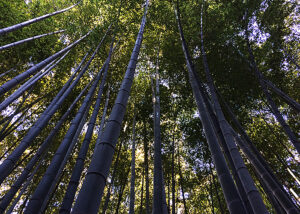
Ashikaga Takauji, the Prince of Kamakura
Ashikaga Takauji, the shogun and the “Prince of Kamakura,” did not discriminate against or hate others; he trusted people and did not doubt them; even toward his enemies, he was never cruel but always forgiving; he spared no expense and gave everything he had to others without hesitation; he knew no fear; even in life-threatening situations, he remained calm enough to compose waka poems; and he was also a devoted practitioner of Zen. In short, Takauji was a charismatic figure who even men found captivating.
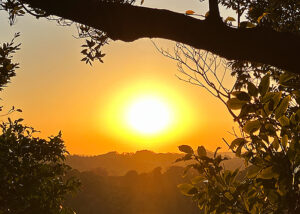
Minamoto no Sanetomo: A Ray of Light Piercing Through the Mountain Shadows
Historically speaking, if Minamoto no Sanetomo had never existed, the charm of modern-day Kamakura would be far more than merely halved. Sanetomo did not let trivial matters sway his mood; he possessed the noble spirit passed down through the Minamoto clan, a compassionate heart, and was a genius poet of extraordinary talent. Though it is tragic that Sanetomo passed away before fulfilling his destiny, I still feel compelled to thank the God for having brought him into this world.
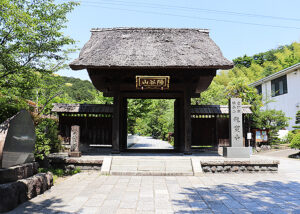
Overlooked tourist spots in Kamakura (especially the former strongholds of the Later Hojo clan)
The members of the “Later Hojo clan”—also known as the “Neo-Hojo”—and particularly the “Tamanawa Hojo,” represent another important, yet often overlooked, facet of Kamakura. I encourage you to explore the traces they left behind on the outer side of the Kiridōshi” (the mountain pass).There are also other historic sites associated with sad anecdotes and unique legends.
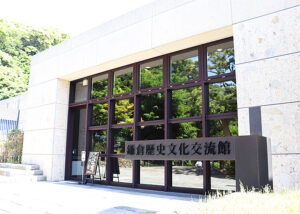
The “Kamakura History and Culture Exchange Center”: A Premier Kamakura-Style Space
The Kamakura History and Culture Museum is a beautiful building designed by the renowned British architect Norman Foster. The museum houses a wealth of valuable exhibits, and its grounds feature numerous historical sites that epitomize Kamakura, spanning from the medieval to the modern eras. Climb up to the observation deck for a breathtaking view of the ocean.
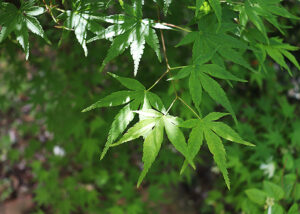
“The Heart Sutra”: This Essential Power Tool!
The famous phrase from the Heart Sutra: “Form is emptiness; emptiness is form.” Of these, the phrase “emptiness is form” offers a precious teaching that helps us live with a positive and vibrant spirit in today’s complex and chaotic society. For us today, who tend to voluntarily burden ourselves with mental distress and stray onto the path of delusion, the Heart Sutra is truly an essential power tool for cutting through evil and delusion, enabling us to live our lives with vigor and vitality.
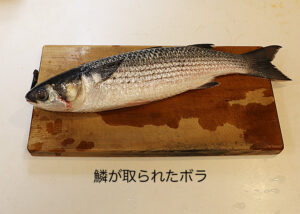
Eating the rivals of “Edo-mae” (Tokyo Bay) fishing!
Back when Tokyo was known as Edo, Tokyo Bay and the Sumida River, along with other waterways, must have been a veritable paradise for anglers.There were far more fish swimming there than there are today, and aogisu(blue whiting) that are now extinct were still thriving.The shirogisu(white whiting) is still thriving today, and like a lotus blooming from the mud, it delights us with its beautiful, pearl-like body.Edo-mae(Tokyo Bay) fish. That includes shirogisu(white whiting), of course, as well as conger eel, big-eyed flathead, flounder, Konoshiro, and so on. If we even include fish like the Ginpo—a staple of high-end tempura—a truly vast array of species comes to mind. However, here I’d like to focus specifically on three fish that are particularly familiar to us and renowned as formidable fishing opponents: the sea bass , the black sea bream , and the mullet. I would like to limit my thoughts here to these three fish.
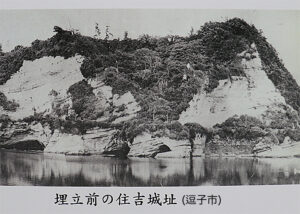
Kamakura and Koga: The Birthplaces of Japan’s Warring States Period
There is a widely accepted theory that Japan’s Warring States period began with the “Kyotoku Rebellion,” which broke out in Kamakura. If this is correct, then Kamakura—or Koga in Ibaraki Prefecture—could be considered the birthplace of the Warring States period. The exploits of Hojo Soun, Japan’s first warlord, may also lend credence to this theory. Furthermore, historical novelist Michiko Nagai has been named an honorary citizen of both Kamakura City and Koga City. For these reasons, the history of the late Muromachi period in the Kanto region remains endlessly fascinating.

The Sweets Yukio Mishima Loved
These are the madeleines from Nisshindo Kashiten in Shimoda, Izu, which were beloved by Yukio Mishima. In a sense, these sweets encapsulate the true essence of Mishima, stripped of his armor. I believe Yukio Mishima's charm lies in his pure, thoughtful, and approachable personality above all else.