Overlooked tourist spots in Kamakura (especially the former strongholds of the Later Hojo clan)
 Lab 鎌倉奥乃院
Another Kamakura
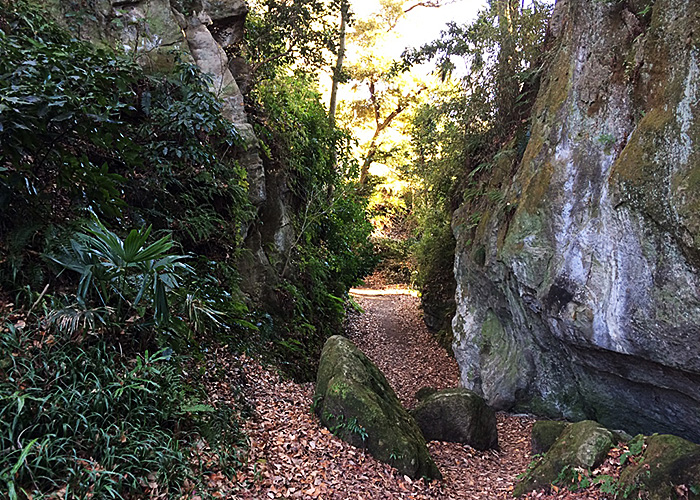
The area inside the so-called “Seven Passes of Kamakura”—an area bordered by the sea on one side and small hills on the other three—is known as “Old Kamakura.” Although it is located within Kamakura City, this area has a distinct atmosphere unlike the rest of the city. Although Kita-Kamakura is the only part of the city situated outside the “Kiridōshi” (the mountain pass), its atmosphere seems to share similarities with that of Old Kamakura. However, this is true only up to the area around Engakuji Temple; if you continue walking toward Ōfuna from there, the atmosphere gradually blends into the more typical ambiance found outside Old Kamakura.
Most tourists flock to Old Kamakura and Kita-Kamakura; for example, nearly all tourists getting off at Kita-Kamakura Station head in the direction of Meigetsuin Temple and Kenchōji Temple, while very few walk in the opposite direction—that is, toward Ōfuna.
When you hear the word “Kamakura,” what comes to mind?
Historical figures like Minamoto no Yoritomo and Nichiren; shrines and temples such as Tsurugaoka Hachimangu and Hasedera; the Great Buddha; hiking; cherry blossoms and autumn foliage; the Enoden train; the ocean; and local cuisine…
It is these attractions that draw tourists, and since they are mostly located in what is known as Old Kamakura and Kita-Kamakura, it is only natural that tourists flock there.
So, does that mean there are absolutely no attractions or sights worth visiting in the area outside “Kiridōshi”, excluding Kita-Kamakura?
I suspect that the image of “Kamakura” that we all share is largely shaped by the history of the rise and fall of the Hojo clan.
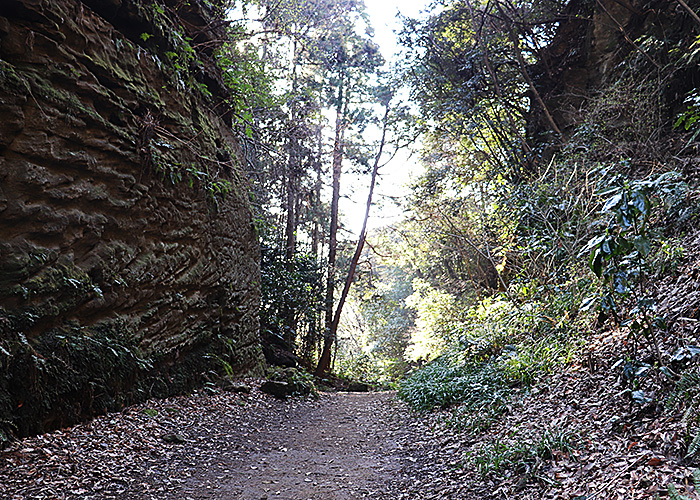
So what about the outside of the Kiridōshi?
There is a firmly established image of the “Later Hojo clan”—also known as the “Neo-Hojo”—who changed their surname from Ise to Hojo in reference to the Hojo clan of Yoshitoki, Yasutoki, Tokiyori, and Tokimune.
In other words, historically speaking, Kamakura was one of the main stages of the Warring States period—a time that everyone, myself included, loves—and as such, it holds within it the stories of joy and sorrow experienced by the people who lived through that era.
When I said that Kamakura was “one of the main stages of the Warring States period,” I meant that Japan during that era had two political centers: one was Kyoto, and the other was Kamakura.
It was not the case that Kamakura lost its political functions following the fall of the Kamakura Shogunate. Takauji Ashikaga and others, who played a key role in bringing about the fall of the Kamakura Shogunate, engaged in heated debate over whether the shogunate should be based in Kamakura or Kyoto. Ultimately, they decided on Kyoto, but at the same time, they resolved to establish the “Kamakura-fu(Kamakura Government)” in Kamakura. They appointed Takauji’s son, Motouji, to the position of “Kamakura Kubō” (Governor of Kamakura), entrusting him with the administration of the eastern provinces.
The “Kantō Kanrei(a shogunal deputy for the Kanto region)” served as an advisor to the Kamakura Kubō, a position that was hereditary within the Uesugi clan. The Uesugi clan was well known to consist of four branches; among them, the Yamanouchi Uesugi and the Ogigayatsu Uesugi were the most powerful, but eventually the two came into conflict and began fighting each other. When the Kubō joined the conflict, turning it into a three-way stalemate, the Uesugi clan’s power finally began to wane. Eventually, they were forced to hand over the prestigious office of Kantō Kanrei to Nagao Kagetora, known as the “Tiger of Echigo.”
Why is “Nagao” Kagetora known as “Uesugi” Kenshin? The answer, of course, is that he succeeded to the position of Kantō Kanrei.
However, there is also a story that the Later Hojo clan had been granted the position of Kantō Kanrei by the Kubō prior to that, and during the reign of the third Hojo Ujiyasu, his daughter was married to the Kubō. In other words, the Kubō’s family was effectively absorbed into the Later Hojo clan as part of their inner circle, and eventually came to disappear naturally within the Later Hojo clan’s sphere of influence.
Even considering just these factors, it seems there were reasons for the Later Hojo and Uesugi clans to be at odds with one another, yet due to various circumstances, the two sides also formed alliances at times. It truly was a Warring States period as changeable as a cat’s eye.
A Very Brief Introduction to the Later Hojo Clan
The founder of the Later Hojo clan was Ise Sōzui, a man of formidable intellect. A native of what is now Okayama Prefecture, he held a position in the Muromachi shogunate. Through his sister’s marriage to the Imagawa clan of Suruga (part of present-day Shizuoka Prefecture), he assumed a position akin to that of a guest commander under the Imagawa. After invading Izu as part of the Imagawa clan’s military campaign, he gradually began to show signs of seeking independence from them. Eventually, having broken free from their influence, he destroyed the Miura clan and ultimately transformed himself into a Daimyo in the Warring States period(Feudal warlord) ruling over the two provinces of Izu and Sagami.
It was Ujitsuna, the second generation who succeeded Sōzui, who changed the family name to Hojo. He moved the clan’s base from Nirayama in Izu to Odawara (in Sagami Province, present-day Kanagawa Prefecture), and from then on, using this as their main castle, the Later Hojo clan—under Ujiyasu and later Ujimasa—expanded their territory and truly grew into the dominant power of the Kantō region. During this period, as noted above, the venerable Uesugi clans of Yamanouchi and Ogigayatsu—which had long served as advisors to the Kamakura Kubō—fell into decline. Furthermore, the Kubō, who had moved from Kamakura to Koga (Ibaraki Prefecture), was also absorbed by the Later Hojo clan. Consequently, the Kanto region, which had previously been divided among various factions, was effectively painted entirely in the color of the Later Hojo clan.
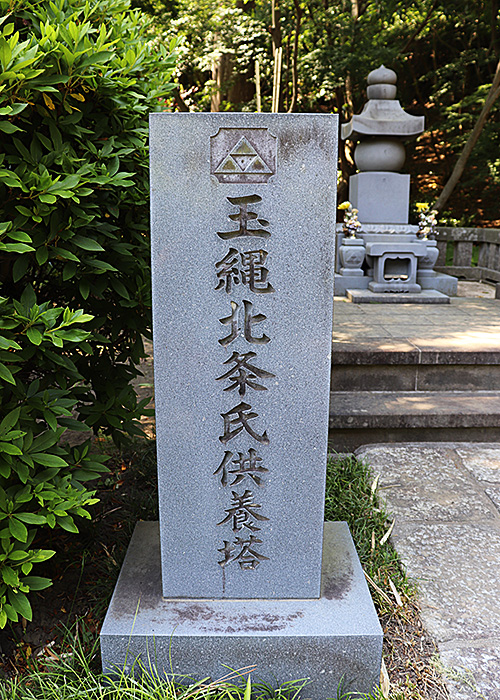
However, the road to this point has been far from smooth. They were once besieged at Odawara Castle by Uesugi Kenshin, known as the “Tiger of Echigo,” who had inherited the position of Kantō Kanrei from the Yamanouchi Uesugi clan. Conversely, they were forced into an alliance with Kenshin, and although they sent Ujiyasu’s son to be adopted as Kenshin’s heir (the boy took the name Uesugi Kagetora), they suffered the misfortune of losing Kagetora after being defeated by Kagekatsu’s forces in the “Rebellion Otate.” Furthermore, the Takeda clan, with whom they had formed the so-called Kai-Sagami-Suruga Alliance, unilaterally broke the alliance. During the reign of Takeda Katsuyori, the Hojo clan found themselves at a severe disadvantage against the Takeda, and in an attempt to break the deadlock, they even submitted to the Oda regime.
Then the Honnōji Incident occurred. Order was once again thrown into chaos, and the Hojo clan formed an alliance with the Tokugawa clan. As a result, Tokugawa Ieyasu’s daughter married Ujimasa’s eldest son, Ujinao.
And so, in any case, under the rule of Ujimasa and his son Ujinao, the Hojo clan rose to become one of the great Daimyo families of the land. However, as you all know, it was during the very same reign of Ujimasa and Ujinao that they were crushed by Toyotomi Hideyoshi in the blink of an eye.
However, the Later Hojo clan did not, in fact, disappear completely from the pages of history. As mentioned above, because Tokugawa Ieyasu’s daughter had married Hojo Ujinao, Ujinao’s life was spared, and the Later Hojo clan was permitted to continue its lineage. They survived throughout the Edo period as the lords of the Sayama Domain in Kawachi Province (present-day Osaka Prefecture).
Tokugawa Ieyasu, who advised Toyotomi Hideyoshi to spare the life of Hojo Ujinao, followed in the footsteps of Minamoto no Yoritomo to be appointed Shogun and established a shogunate in the same Kantō region. That location was Edo, situated about 50 kilometers east of Kamakura, and Edo Castle became both the seat of government and the residence of successive Tokugawa shoguns. Edo Castle was built by Ota Dokan, the steward of the Uesugi clan of Ogigayatsu. It later became an important satellite castle for the Later Hojo clan, and today it serves as the residence of His Majesty the Emperor.
“Tamanawa Castle,” the only Warring States period castle in Kamakura
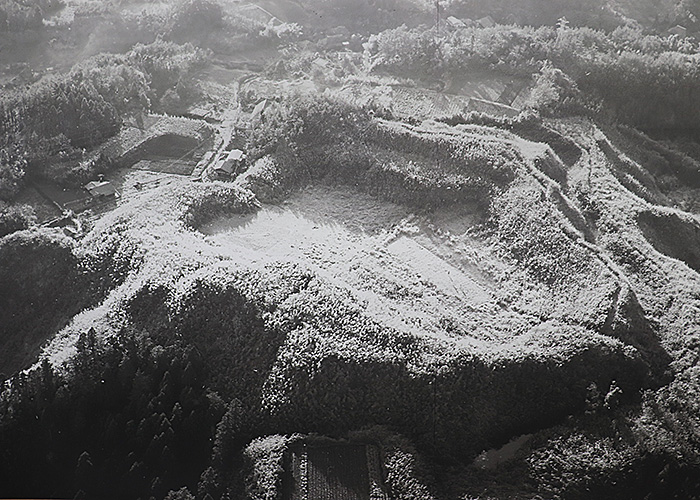
Ise Sōzui built Tamanawa Castle to subdue the Miura clan, who were based on the Miura Peninsula; it was located in what is now the Shiromeguri district of Kamakura City. After defeating the Miura clan at Arai Castle, Tamanawa Castle became an important satellite castle of Odawara Castle, the stronghold of the Later Hojo clan.
The reason this is so important is that, while Tamanawa Castle was undoubtedly a strategic stronghold situated on the border between Sagami and Musashi Provinces, it also served as a castle for governing “Kamakura”—one of the main stages of the Warring States period, as mentioned above. Furthermore, since they adopted the name “Hojo”—a change from “Ise”—in reference to the Kamakura Hojo clan, the land of Kamakura was likely a place of great significance to the Later Hojo clan, almost like their ancestral homeland. Consequently, the Hojo clan served as lords of Tamanawa Castle for generations, beginning with Ujitoki, the second son of Ise Sōzui.
The lineage of the lords of Tamanawa Castle is known as the “Tamanawa Hojo clan.” This clan maintained a close, younger-brother-like relationship with the main branch, the “Odawara Hojo clan,” and consistently supported the main branch—their elder brother—in various ways, both militarily and politically.
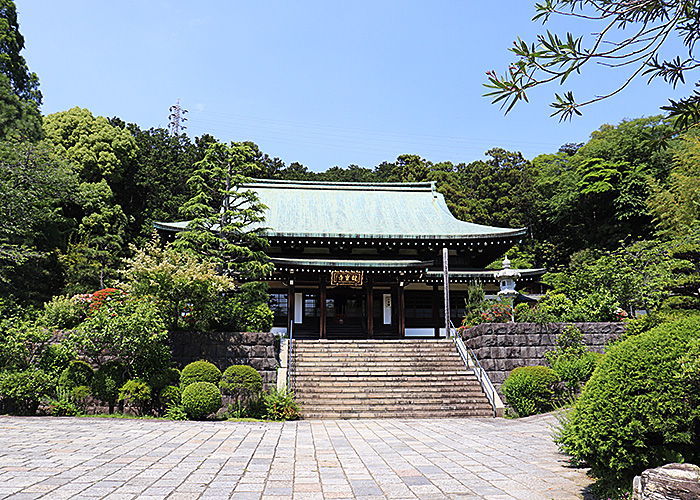
Although Odawara Castle was captured by Toyotomi Hideyoshi, Tamanawa Castle was, of course, also seized by the Toyotomi forces at the same time. Although the surrender was bloodless, this was the result of a decision made by Ujikatsu, the last lord of Tamanawa Castle. It was thanks to his choice that Kamakura was spared the ravages of war. I would argue that Ujikatsu’s contribution was by no means insignificant.
Later, at the behest of Toyotomi Hideyoshi, Hojo Ujikatsu was assigned to serve Tokugawa Ieyasu. He took part in Ieyasu’s campaign against the Uesugi clan and the subsequent Battle of Sekigahara, but eventually died of illness. However, the Tamanawa Hojo lineage was preserved; its members were elevated to the rank of daimyo and continued to exist as part of the Tokugawa hereditary vassals.
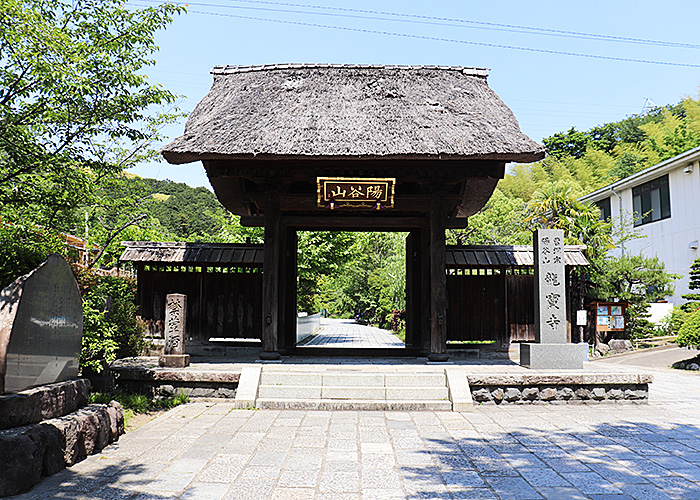
Unfortunately, very little remains of Tamanawa Castle today. Even in the area surrounding the castle ruins, there is little to suggest that a large-scale castle once stood there. However, there are still some traces in the vicinity that evoke memories of its former glory.
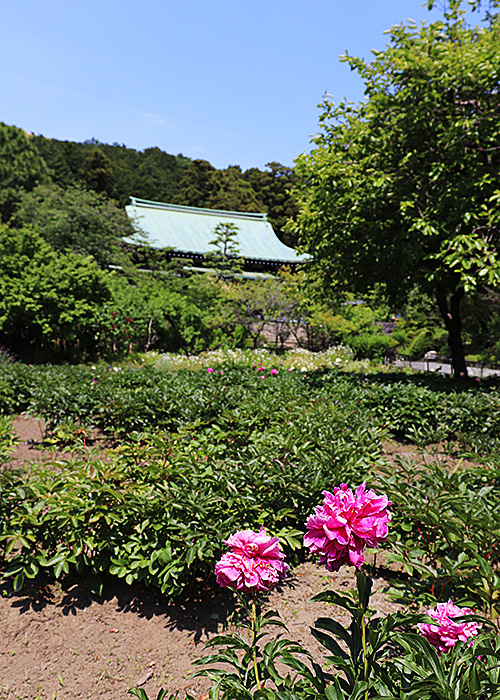
One of them is Ryuhouji Temple. It served as the family temple of the Tamanawa Hojo clan. This spacious temple houses the memorial tablets of successive lords of Tamanawa Castle, as well as that of Minamoto no Sanetomo (the third shogun of the Kamakura Shogunate and a distinguished poet). It is a Soto Zen temple located in Ueki, Kamakura City.
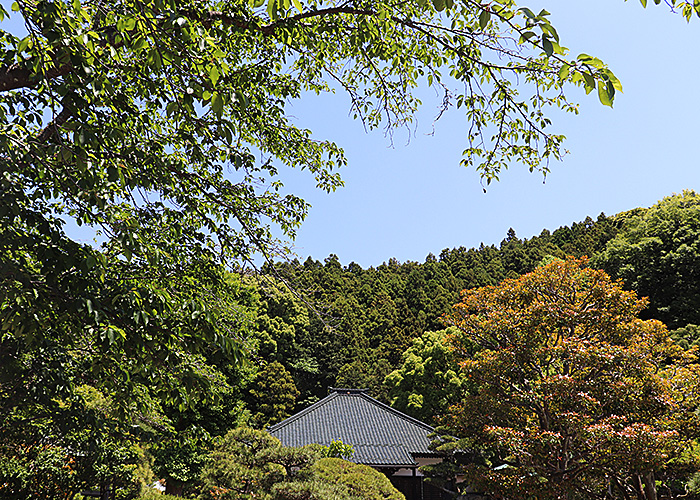
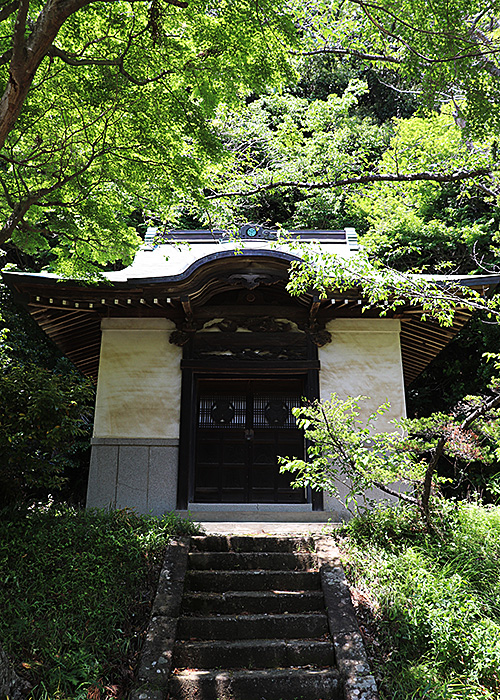
Another is Daichoji Temple. It is a prestigious temple that has been revered for generations by the Later Hojo and Tokugawa clans. The temple houses gravestones said to belong to the Tamanawa Hojo clan. Like Ryuhouji Temple, it is a very charming temple set against a mountain backdrop. It is said that the fourth head priest even received a personal visit from Tokugawa Ieyasu himself. It is a Jodo sect temple located in Iwase, Kamakura City.
There are also places like “Enkoji Temple” and “Tamanawa Kubizuka (Grave),” but I’ll skip those for now.
Other often-overlooked tourist spots in Kamakura
“Genta-zuka” and “Shinobu-zuka”
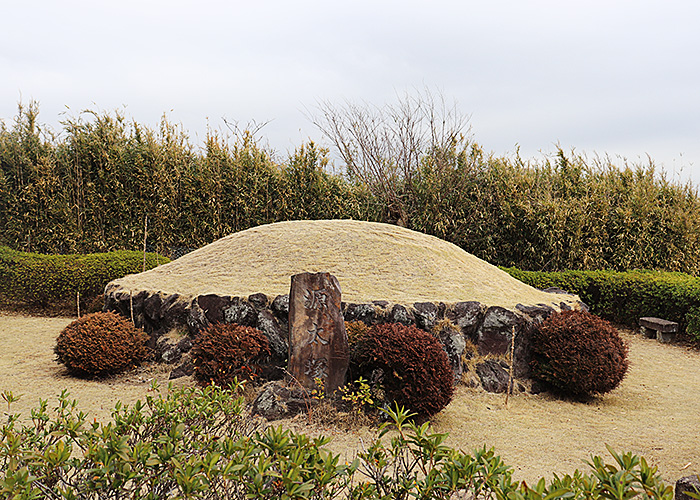
“Genta-zuka” is a mound located at Butsugyoji Temple in Fueda, Kamakura City; it is said that the right arm of Kajiwara Genta Kagesue is buried there. While Butsugyoji Temple is backed by a mountain, Genta-zuka is situated atop that mountain in a spot with a magnificent view.
Kajiwara Genta Kagesue was the eldest son of Kajiwara Kagetoki(A great samurai who served Minamoto no Yoritomo) and one of the protagonists in the famous “Battle for the Vanguard at the Uji River” described in The Tale of the Heike.
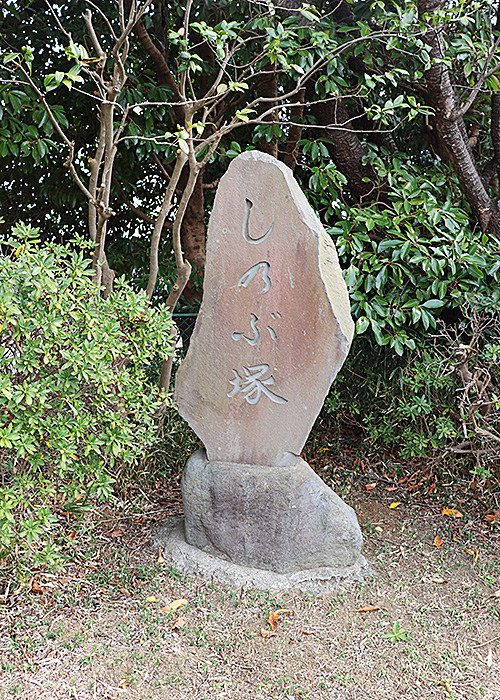
“Shinobu-zuka” is located on Kamakurayama, and it is said to stand facing Genta-zuka. The reason for this is that Shinobu was the wife of Kajiwara Genta Kagesue; upon receiving the tragic news that her husband, Kagesue, had been slain alongside his father, Kagetoki, she took her own life.
As I mentioned earlier, Genta-zuka is located on a hilltop with a splendid view, and from there, one can see Kamakurayama unobstructed. I actually stood there myself, and it really moved me.
“Nakito (Weeping Pagoda)” and “Shorenji Temple”
The “Nakito (Weeping Pagoda)” is a Hōkyōintō(Stone pagoda). The inscription on the pagoda reads “Bunwa 5 (1356),” and because its date is clearly documented and it is in good condition, it has been designated as an Important Art Object of Japan.
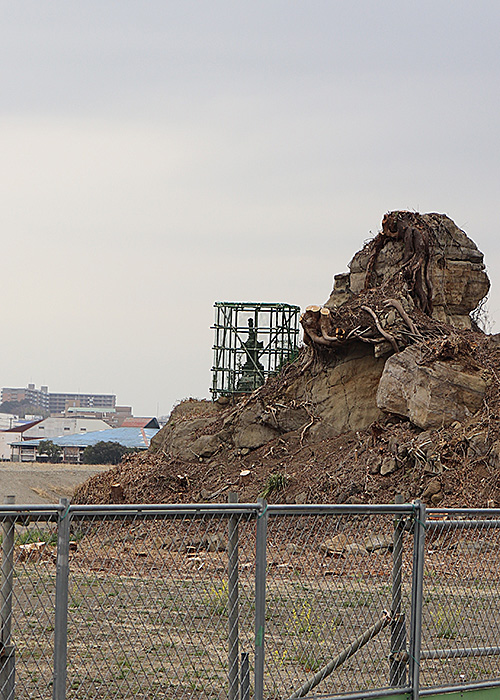
Why is it called the “Nakito (Weeping Pagoda)”? The reason lies in this anecdote: Long ago, it was temporarily moved to Shorenji Temple in Tebiro, Kamakura. However, it is said that every night, the pagoda would sob softly, longing for its original location. When it was returned, it stopped crying immediately.
As I write this, the Nakito is in the condition shown in the photo. I’ve been told they’re currently working to make it safe for the public to visit, but to me, it seemed as though I could hear the pagoda’s sobs.
Incidentally, Shorenji Temple in Tebiro, Kamakura—where the Nakito was temporarily relocated—houses a rare seated statue of Kōbō Daishi(His real name was Kukai. He was the founder of the Shingon sect of Buddhism) from the Kamakura period, also known as the “Kusaridaishi.” It is said that the joints of both legs are crafted to resemble chains, allowing them to move freely.
It is also a temple with a beautiful legend: it is said that, inspired by a single Buddha relic bestowed upon Kōbō Daishi by a celestial maiden, blue lotus flowers bloomed overnight, nearly covering the entire surface of the pond.
A Guide to Easy-to-Read Books on Kamakura
The books below, produced by Lab Deep in Kamakura, provides an accessible introduction to Kamakura from a variety of perspectives.
“The Key to Kamakura” Author:Hisashi Toda
Kamakura is like a green box. Open its lid with the key and explore what's inside! You'll find many stories inside.
This book is an introductory guide to Kamakura. Nevertheless, it reveals Kamakura's multifaceted, mosaic-like nature.
It is an in-depth sightseeing guidebook, and we have included as many photos as possible, making them easy to view.
Table of Contents:
1. Middle Ages
2. Boundary Points
3. Yoritomo (源頼朝)
4. Sanetomo (源実朝)
5. The Great Buddha (大仏)
6. Author
7. Abutsuni (阿仏尼)
8. Yasujirō Ozu (小津 安二郎)
9. Actress
10. Sea
11. Enoshima (江の島)
12. Gardens
If you are considering a purchase, please click the button below.
“KAMAKURA” Author:Yone Noguchi
This is a guidebook to Kamakura by Yone Noguchi(野口米次郎), one of Japan's greatest heroes. However, unlike ordinary guidebooks, it reveals the true face of Kamakura: a city of silence, history, and Buddhism.
Table of Contents:
BY THE ENGAKUJI TEMPLE
THE TEMPLE OF SILENCE
A LEGEND OF THE BUDDHA'S TOOTH
BY A BUDDHA TEMPLE
UNDISCOVERED KAMAKURA
THE WONDER OF BRONZE
BY THE DAIBUTSU AT KAMAKURA
NICHIREN
THE HACHIMAN SHRINE
ENOSHIMA
If you are considering a purchase, please click the button below.
Lab Deep in Kamakura Juei Masuda