Visiting the Western-style House in Kamakura: The Former Residence of Kachonomiya
 Lab 鎌倉奥乃院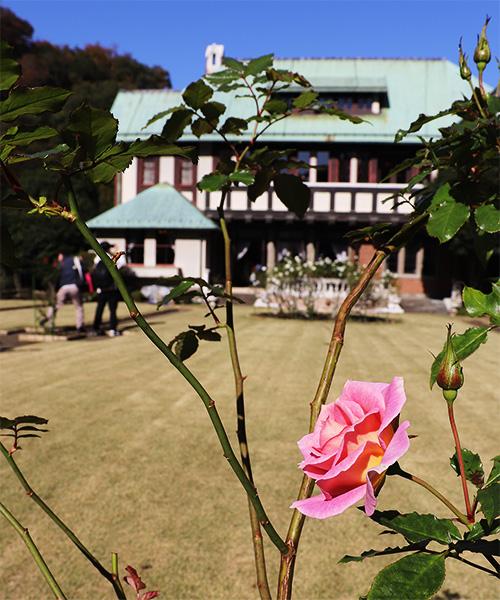
Kacho Hironobu
Kacho Hironobu was a nobleman and a military man. The "Kachonomiya" is one of the branch of the Imperial Family. Incidentally, there are currently four branch of the Imperial Family: Akishinonomiya, Hitachinomiya, Mikasanomiya, and Takamadonomiya. Therefore, the Kachonomiya family does not exist.
The Former Residence of Kachonomiya, located in the lush greenery of Takumagayatsu Valley in Kamakura, was built in 1929 (Showa 4) for Marquis Kacho Hironobu.
Kacho Hironobu: 1905 (Meiji 38) - 1970 (Showa 45)
The Former Residence of Kachonomiya
The Former Residence of Kachonomiya lies deep within the quiet Takumagayatsu Valley, beyond the Bamboo Temple, Hokokuji.
The Takumagayatsu Valley is well-known in Japanese history. One reason for its fame is that the Takuma School of Painting, which was active mainly during the medieval period, had its workshop there. Another reason is that the Takuma Uesugi clan, one of the "Four Houses of Uesugi," which were also active during the medieval period, had its headquarters there.
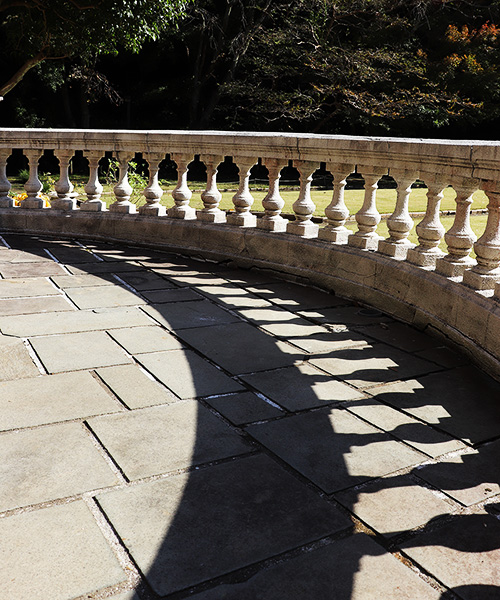
As mentioned above, this residence was built in 1929 (Showa 4) as the residence of Marquis Kacho Hironobu. Among pre-war Western-style buildings remaining in Kamakura, it boasts the second largest scale after The Kamakura Museum of Literature (the former residence of the Maeda Marquis family) in Hase.
The exterior is half-timbered, an architectural style in which wooden structural elements, such as pillars and beams, are exposed on the exterior with brick or plaster filling the spaces in between. It blends seamlessly with the solemn gate and entranceway, the greenery of tall trees inside and outside the grounds, and the expansive French-style garden. Together, these features evoke the splendor of life in days gone by.
The Kamakura City Office acquired this residence in 1996 (Heisei 8), and it is currently registered as a national tangible cultural property.
This beautiful Western-style building has been used as a filming location for many TV dramas and movies.
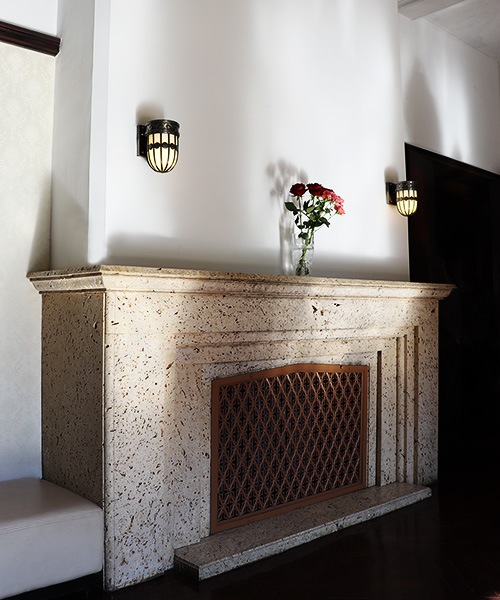
The garden is open to the public almost year-round. However, the interior of the building is only open twice a year, for about two days each time: in the spring and in the fall.
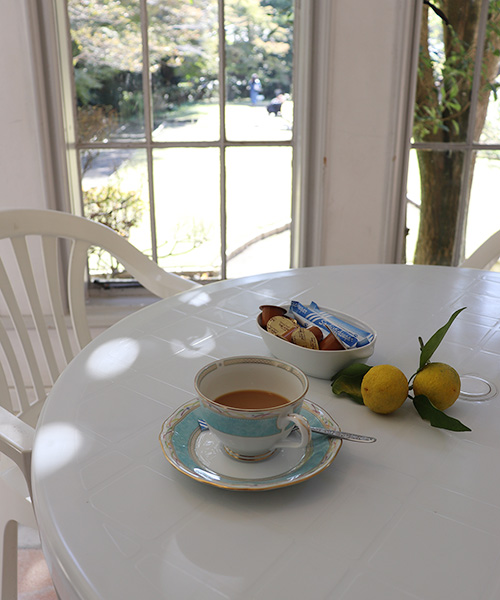
You can enjoy coffee in the sunroom or dining room when the interior is open to the public.
A Guide to Easy-to-Read Books on Kamakura
The books below, produced by Lab Deep in Kamakura, provides an accessible introduction to Kamakura from a variety of perspectives.
“The Key to Kamakura” Author:Hisashi Toda
Kamakura is like a green box. Open its lid with the key and explore what's inside! You'll find many stories inside.
This book is an introductory guide to Kamakura. Nevertheless, it reveals Kamakura's multifaceted, mosaic-like nature.
It is an in-depth sightseeing guidebook, and we have included as many photos as possible, making them easy to view.
Table of Contents:
1. Middle Ages
2. Boundary Points
3. Yoritomo (源頼朝)
4. Sanetomo (源実朝)
5. The Great Buddha (大仏)
6. Author
7. Abutsuni (阿仏尼)
8. Yasujirō Ozu (小津 安二郎)
9. Actress
10. Sea
11. Enoshima (江の島)
12. Gardens
If you are considering a purchase, please click the button below.
“KAMAKURA” Author:Yone Noguchi
This is a guidebook to Kamakura by Yone Noguchi(野口米次郎), one of Japan's greatest heroes. However, unlike ordinary guidebooks, it reveals the true face of Kamakura: a city of silence, history, and Buddhism.
Table of Contents:
BY THE ENGAKUJI TEMPLE
THE TEMPLE OF SILENCE
A LEGEND OF THE BUDDHA'S TOOTH
BY A BUDDHA TEMPLE
UNDISCOVERED KAMAKURA
THE WONDER OF BRONZE
BY THE DAIBUTSU AT KAMAKURA
NICHIREN
THE HACHIMAN SHRINE
ENOSHIMA
If you are considering a purchase, please click the button below.
Lab Deep in Kamakura Juei Masuda