Ashikaga Takauji, the Prince of Kamakura
 Lab 鎌倉奥乃院
Ashikaga Takauji: A man of great ability, yet somehow lacking
No matter how splendid and noble the banner of the Restoration of Imperial Rule might have been, there was no way the samurai would ever again be content to serve merely as the imperial court’s watchdogs. The samurai had but one concern: the preservation—and, if possible, the expansion—of their own fiefs. It was therefore only natural that the Kenmu Restoration which tended to disregard their interests, should collapse so quickly.
In fact, many of the samurai who sided with Emperor Go-Daigo did so not so much because they sympathized with the ideals of the Restoration of Imperial Rule, but because they calculated that they were more likely to receive rewards by aligning themselves with the Emperor rather than with the declining Hojo clan. In other words, they were betting on the winning horse.
The times still called for a leader of the warrior class.
It is said that Ashikaga Takauji, who had set out for Kamakura to suppress the Nakasendai Rebellion instigated by Hojo Tokiyuki—the son of Hojo Takatoki—was greeted with great enthusiasm by the samurai he encountered along the way. Upon entering Kamakura, perhaps feeling as if he had become a second Minamoto no Yoritomo, he reportedly bestowed rewards upon people one after another, acting as though he had already become shogun.
However, for Emperor Go-Daigo, this was a most serious matter. Consequently, he dispatched Nitta Yoshisada and others to Kamakura to subdue Takauji, who had until then been under Emperor Go-Daigo’s control.
Now, it was Takauji who was truly taken aback. Like a rabbit fleeing into its burrow, he shut himself away at Jōkōmyō-ji Temple in Kamakura. Though his younger brother, Tadayoshi, repeatedly urged him to rise up, Takauji was said to be so terrified that he declared he could never bring himself to shoot an arrow at the Emperor; instead, he would disguise himself as a monk and write a record for his descendants to prove that he had never harbored any disloyal thoughts toward the Emperor.
This is a particularly interesting scene.
Takauji likely had no intention whatsoever of rebelling against Emperor Go-Daigo; it was simply what the samurai desired, and he probably just wanted to establish a shogunate and begin samurai rule, much like Minamoto no Yoritomo had done. However, to Emperor Go-Daigo, Takauji’s behavior could only be seen as a direct challenge to his authority. That was only natural. The Emperor’s anger deeply unsettled Takauji. He was unable to muster the resolve to face the advancing massive army led by Yoshisada.
“There’s no helping it; let’s fight without my older brother,” said Tadayoshi, and they marched westward. However, since they were defeated by Yoshisada’s army at various locations, Takauji finally got off his backside and took action.
There was a reason why Ashikaga Takauji set his sights on ruling the realm, and why so many samurai rallied to his cause. It was because he was a nobleman from a family that could be considered the direct line of the Minamoto clan.
The Ashikaga clan descended from Yoshikuni, a son of Hachiman Tarou Yoshiie (while the Minamoto clan, which died out with Sanetomo, descended from Yoshichika, another son of Yoshiie). Given their lineage, they held a prominent position within the Kamakura shogunate, and successive heads of the clan almost always married into the Hojo family. Takauji, too, married the daughter of Moritoki Akahashi, a member of the Hojo clan.
In terms of lineage, the Ashikaga clan was by no means inferior to the Hojo; on the contrary, they possessed a noble lineage that would have made it entirely natural for one of their own to become shogun, and Takauji must surely have been aware of this. Therefore, when the Hojo clan reached the era of Takatoki and their administration began to lack impartiality, Takauji likely considered taking their place; and as far as Takauji was concerned, he certainly had the standing to entertain such thoughts without it being unjust.
Among the many samurai who shone like stars in the night sky, Takauji alone was a giant star whose brilliance made him truly worthy of being the leader of the warrior class.
However, the reason why all the samurai rallied behind him was not merely because of his noble lineage. Perhaps due to his fine upbringing, Takauji did not discriminate against or hate others; he trusted people and did not doubt them; even toward his enemies, he was not cruel but always forgiving; he spared no expense, giving everything away without hesitation; he knew no fear—or perhaps a certain part of his brain responsible for fear was missing—and even in life-threatening situations, he had the composure to compose waka poems. He was also a devoted practitioner of Zen. In short, Takauji possessed a charisma that even men found captivating, which is why the samurai rejoiced and gathered under his banner.
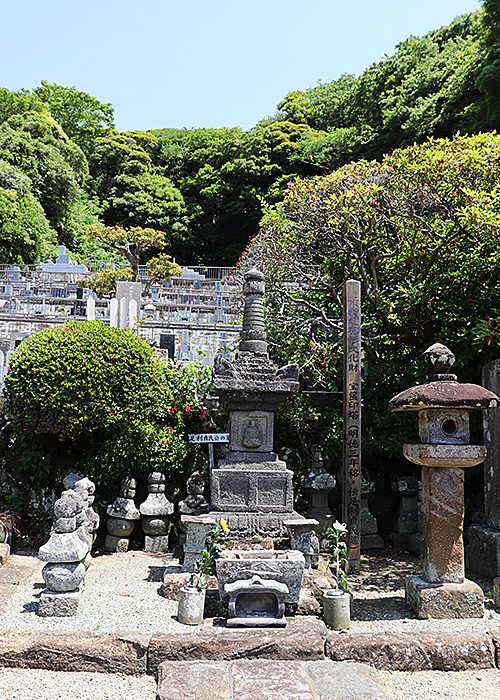
The painter Tamako Kataoka has a series called “Tsu-ra-ga-ma-e(facial appearance),” and the first figure depicted in it is Ashikaga Takauji; I believe that Takauji's face in that painting truly captures his personality.
The Poet, Ashikaga Takauji
Power and culture are inseparable. If power is a majestic mountain range shielding against the biting north wind, then culture is the serene landscape of a grassy plain where the breeze blows gently. That is likely why the Hojo clan, the ruling power of the time, not only produced many poets of their own but also encouraged their vassals and retainers to compose poetry as part of their cultural and educational policies.
But when it came time to compose poems, they could not, for the sake of their honor as samurai, leave behind poems that would bring shame upon the people of Kyoto.
Fortunately, Kamakura was home to the brilliant waka poet Minamoto no Sanetomo, who studied under Fujiwara no Teika. Teika’s son, Tameie, married the daughter of the Utsunomiya clan, a retainer family in the Kanto region. Furthermore, thanks to the lawsuit filed by Abutsu-ni against the Kamakura Shogunate, the Kamakura waka community was able to forge deep ties with the Reizei family. In addition, numerous other poets traveled back and forth between Kyoto and Kamakura, and it was likely through their efforts that Kyoto culture took root in the Kanto region.
The samurai had studied the Kyoto style of poetry (since there was no such thing as a “samurai style” to begin with, the only models they could learn from were the poems composed by the court nobility and others up to that point), and over time, they were finally beginning to approach the level of the poems composed by the court nobility and others.
Even for warriors whose profession was murder, waka poetry was limited to themes of flowers, birds, wind, the moon, love, and the transience of life; the notion that the beauty of waka as poetry lay solely in verses that celebrated these subjects was, in a sense, correct.
Minamoto no Sanetomo, Prince Munetaka, the Hojo clan—including Hojo Masamura—and the many gokenin(shogunal vassal) who shaped the political landscape composed numerous poems in Kamakura and even formed a poetry circle there. As a prince of Kamakura himself, Ashikaga Takauji naturally devoted himself to poetry and left behind many outstanding works.
A collection of poems titled “等持院殿御百首(Toujiindonoonhyakushu)” has been preserved. It is a collection of one hundred waka poems by Ashikaga Takauji, known as “Touji-in-dono.”
Takauji was also an accomplished poet whose works were included in imperial anthologies such as the “続後拾遺和歌集(Shokugoshūi Wakashū)” and the “風雅和歌集(Fūga Wakashū).”
A Guide to Easy-to-Read Books on Kamakura
The books below, produced by Lab Deep in Kamakura, provides an accessible introduction to Kamakura from a variety of perspectives.
“The Key to Kamakura” Author:Hisashi Toda
Kamakura is like a green box. Open its lid with the key and explore what's inside! You'll find many stories inside.
This book is an introductory guide to Kamakura. Nevertheless, it reveals Kamakura's multifaceted, mosaic-like nature.
It is an in-depth sightseeing guidebook, and we have included as many photos as possible, making them easy to view.
Table of Contents:
1. Middle Ages
2. Boundary Points
3. Yoritomo (源頼朝)
4. Sanetomo (源実朝)
5. The Great Buddha (大仏)
6. Author
7. Abutsuni (阿仏尼)
8. Yasujirō Ozu (小津 安二郎)
9. Actress
10. Sea
11. Enoshima (江の島)
12. Gardens
If you are considering a purchase, please click the button below.
“KAMAKURA” Author:Yone Noguchi
This is a guidebook to Kamakura by Yone Noguchi(野口米次郎), one of Japan's greatest heroes. However, unlike ordinary guidebooks, it reveals the true face of Kamakura: a city of silence, history, and Buddhism.
Table of Contents:
BY THE ENGAKUJI TEMPLE
THE TEMPLE OF SILENCE
A LEGEND OF THE BUDDHA'S TOOTH
BY A BUDDHA TEMPLE
UNDISCOVERED KAMAKURA
THE WONDER OF BRONZE
BY THE DAIBUTSU AT KAMAKURA
NICHIREN
THE HACHIMAN SHRINE
ENOSHIMA
If you are considering a purchase, please click the button below.
Lab Deep in Kamakura Juei Masuda