Minamoto no Sanetomo: A Ray of Light Piercing Through the Mountain Shadows
 Lab 鎌倉奥乃院
The Assassination of Minamoto no Sanetomo: The Most Mysterious and Significant Incident in Japanese History
Minamoto no Sanetomo was the second son of Minamoto no Yoritomo, the founder of the Kamakura Shogunate. His childhood name was “Senman,” but upon coming of age, he took the name “Sanetomo”—a name bestowed upon him by Emperor Go-Toba. Immediately upon coming of age, he was appointed Shogun (Great General of the Eastern Expedition). This was because his older brother, the former shogun Yoriie, had been exiled from Kamakura, leaving the position vacant. Tragically, Yoriie himself was brutally assassinated the following year at Shuzenji in Izu. Sanetomo was still a boy, not yet fifteen years old, when he received the news of his own brother’s assassination.
As for Sanetomo’s choice of a bride, he rejected the daughter of a retainer (of the Ashikaga clan) who had been proposed as a candidate. Consequently, he brought a daughter of the court noble Bōmon Nobukiyo (of the Fujiwara clan) from Kyoto. Whether this was done to sever in advance the same chain of events that led to Yoriie’s assassination, or whether it stemmed from his own longing for Kyoto culture, or perhaps was due to the intentions of Emperor Go-Toba (who was the son of Bōmon Nobukiyo’s sister), is unclear. In any case, Sanetomo did not follow in Yoriie’s footsteps.
By the way, Minamoto no Sanetomo is often described as a politically inept figure, but was that really the case?
The story goes like this. The shogunate held a discussion regarding the repair of a bridge over the Sagami River. This bridge was considered an ill-omened one, as it was where Minamoto no Yoritomo had fallen from his horse and died on his way home from a memorial service for the bridge. Consequently, the senior officials of the shogunate unanimously agreed that there was no need to repair it at this late stage. However, Sanetomo argued that his father Yoritomo’s death had occurred twenty years after he had become the head of the warrior class and after he had attained the highest rank in the court hierarchy; thus, it had no connection whatsoever to the bridge itself. He further noted that the bridge was convenient for his own pilgrimage to the two shrines (Sanetomo’s visits to Izusan Shrine and Hakone Shrine) and would greatly benefit the common people’s travel, and so he ordered its prompt repair. Sanetomo decisively made a rational and brilliant judgment, free from the shackles of baseless superstition.
He also composed a poem expressing sympathy for a child weeping by the roadside after losing his parents, pitying even the animals for the love parents have for their young, and pleading with the Dragon King of Heaven to put an end to the relentless rains that were causing the people such distress. Such was the perspective that Sanetomo possessed.
Was Sanetomo really such a foolish politician?
The two people with whom Sanetomo was particularly close were Yoshimori Wada and Zen Master Eisai.
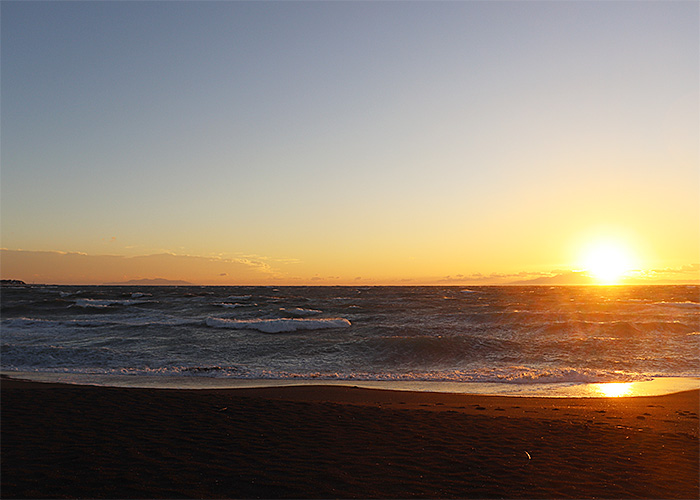
The so-called “Battle of Wada” was a bitter and deeply regrettable event for Sanetomo. Even after the battle, he was haunted by the spirits of the fallen soldiers, including Yoshimori, and went so far as to sink Buddhist sutras into the sea off Miura to perform memorial rites for them (the waters off Wada on the Miura Peninsula, where the sutras were said to have been sunk, were, as the name suggests, the territory of the Wada clan, including Yoshimori). The water in this bay is exceptionally clear, and today it bustles with swimmers during the summer.
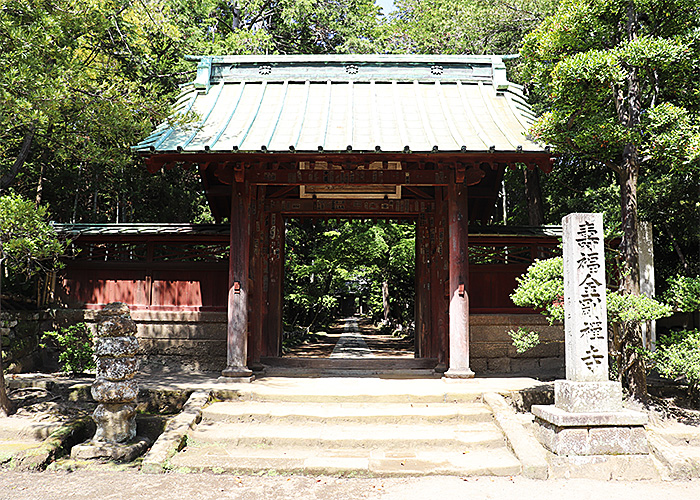
As for the other Eisai, he was a distinguished monk who traveled to Song China twice; he was also the founder of the Rinzai school of Zen Buddhism. In Kamakura, he became the founding abbot of Jufuku-ji Temple and frequently engaged in spiritual discussions with Sanetomo. Sanetomo must have listened intently to the words of this elder, who was more than fifty years his senior.
I secretly suspect that Eisai’s influence was surely behind Sanetomo’s relentless pursuit of high office and his plan to build a large ship at Yuigahama in an attempt to sail to Song China. even if that were the case, I believe the reason he acted so recklessly, heedless of those around him and following his own will, was the passionate spirit of the Seiwa Genji—a bloodline that flows equally through his veins, tracing back to Yoritomo and Yoshitomo, and further still to Hachiman Taro Yoshiie.
I don’t think Sanetomo was by any means a weak-willed, narrow-minded man.
When I consider the events leading up to his arrival at Tsurugaoka Hachimangu—the place where he met his end—and the manner in which he was killed, I can’t help but feel that, in its own way, it resembles the death of a hero. Without that heroic spirit, how could he have dared to enter that place (Tsurugaoka Hachimangu) at that very moment?
There have long been conspiracy theories surrounding Sanetomo’s death; while Kugyo was likely the one who carried it out, the mastermind is said to have been either Hojo Yoshitoki or Miura Yoshimura. If Miura Yoshimura had been the mastermind, Hojo Yoshitoki—who had ordered the execution of Yoshimura’s kinsman Wada Yoshimori and others—would likely have been the target. However, for reasons that remain unclear (though various theories exist), Yoshitoki was absent at the time and thus escaped unharmed. On the other hand, if Hojo Yoshitoki was the mastermind, then the target can only have been Sanetomo himself.
This is just my personal speculation, but it seems that Sanetomo held Emperor Go-Toba in high esteem and sought to integrate the shogunate into the imperial court in Kyoto, while Yoshitoki, for his part, appeared to feel a mission to establish a government in the Kantō region that was firmly rooted in the samurai class—a government by the samurai, for the samurai. In other words, the Kamakura Shogunate was led by two leaders with entirely different ideologies. If Yoshitoki was the mastermind, then God defeated Sanetomo and ensured Yoshitoki’s victory.
Shortly after Sanetomo’s death, the Jōkyū War broke out, but even then, the God ensured Yoshitoki’s victory and exiled Emperor Go-Toba to Oki Island (Shimane Prefecture), never allowing him to return to the capital. From that time until the Meiji Restoration, Japan developed a somewhat unique national character in which the imperial court and the shogunate coexisted in a way that seemed to blend seamlessly, creating a complex dual structure.
Is it too far-fetched to imagine that if Sanetomo had lived longer, Japan might not have ended up with two parallel political centers—Kyoto and Kamakura, or perhaps Edo?
The Genius Poet with a Unique Talent: Minamoto no Sanetomo
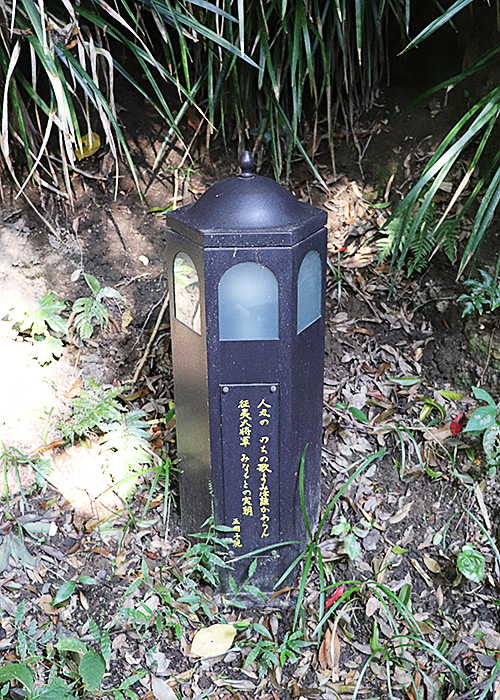
The Kamakura Museum of Literature features a vast, beautiful garden. Several of the garden lights there are inscribed with waka and tanka poems associated with Kamakura, including some by Sanetomo; the one by Masaoka Shiki bears the following poem:
「人丸ののちの歌よみは誰かあらん征夷大将軍みなもとの実朝」
The meaning of this tanka is as follows: Who was the great poet who succeeded Hitomaro? It was Shogun Minamoto no Sanetomo.
Masaoka Shiki is famous for his high regard of Sanetomo as a poet, but personally, I would also like to include Saigyo—who lived slightly before Sanetomo—as another “poet of the post-Hitomaro era.” It is said that when asked by someone, Matsuo Bashō replied without hesitation, “Saigyo and the Right Minister of Kamakura (Sanetomo),” and I must say, that is truly Bashō for you.
I believe Saigyo’s and Sanetomo’s poems are similar. This is because neither of them composed poems for the sake of poetry; in other words, they differed in style from the Kyoto poetry circle and were poets who simply and honestly expressed the emotions evoked by the scenery and other things they actually witnessed in thirty-one syllables. In short, I believe they share a commonality in that they were both poets of genuine sincerity.
Of course, not all the poems they composed were masterpieces; there were quite a few that were run-of-the-mill and mediocre. Sanetomo’s Kinkai Wakashū also contains many such ordinary poems. Yet scattered among them are poems of such extraordinary brilliance that they are truly eye-opening.
Poetry is, after all, a reflection of the poet himself. There is no doubt that Sanetomo’s solitary existence—resembling a faint ray of winter light piercing the terrifying, black-clad mass of a realist samurai—served as a crucial foundation for his poetry. Just as Emperor Go-Toba’s poems gained even greater depth after he was exiled to the desolate island of Oki.
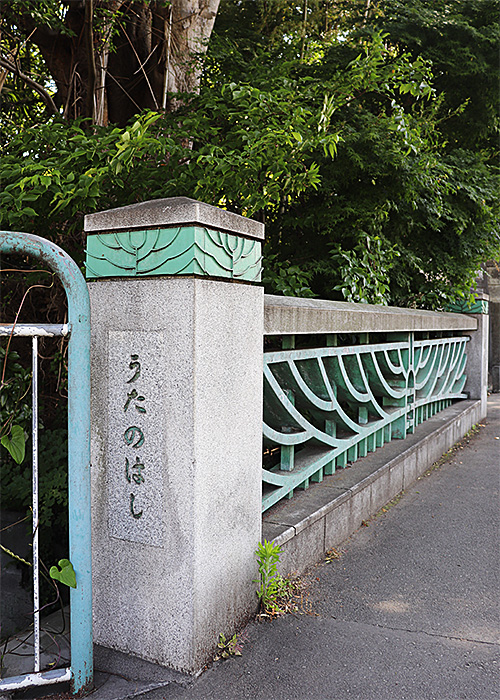
Sanetomo was lonely, but he was not bitter. For example, there is a poem he composed the morning after he returned to Kamakura from his pilgrimage to the two shrines (his visit to Izusan Shrine and Hakone Shrine), in which he notes that no one had come to attend to him, yet he neither lamented nor grew angry, simply assuming that each person must have had their own affairs to attend to. I believe this poem, in particular, captures the state of mind Sanetomo was in.
I believe Sanetomo was someone who had truly grasped not only “form is emptiness” but also “emptiness is form.” Having attained a state of perfect harmony, he did not laugh or cry over trivial matters. That is why, as mentioned above, I believe he felt genuine sorrow when he saw a child who had lost both parents, showed compassion for the common people, and even extended his gentle, observant gaze to animals. I consider him a truly rare figure for his time.
The very last poem in the Kinkai Wakashū is a tribute to the famous Emperor Go-Toba. I believe that poem, too, was composed with sincerity and from the heart.
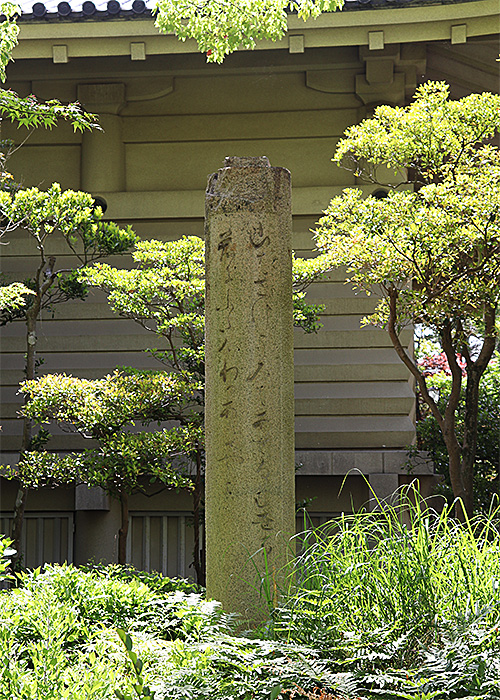
It must have been a source of great regret for Sanetomo to have fallen to Kugyo’s murderous blade before he could fulfill his destiny. It is also a matter of deep regret for us in later generations. While “what ifs” are meaningless in history, had he lived even ten more years, there is no telling what splendid role the God might have assigned him on the grand stage of history.
Although it is tragic that Sanetomo passed away in his twenties, before his life was fully lived, I still want to express my gratitude to the God who brought him into this world. For if Sanetomo had never existed in history, the charm of present-day Kamakura would be far more than just halved.
A Guide to Easy-to-Read Books on Kamakura
The books below, produced by Lab Deep in Kamakura, provides an accessible introduction to Kamakura from a variety of perspectives.
“The Key to Kamakura” Author:Hisashi Toda
Kamakura is like a green box. Open its lid with the key and explore what's inside! You'll find many stories inside.
This book is an introductory guide to Kamakura. Nevertheless, it reveals Kamakura's multifaceted, mosaic-like nature.
It is an in-depth sightseeing guidebook, and we have included as many photos as possible, making them easy to view.
Table of Contents:
1. Middle Ages
2. Boundary Points
3. Yoritomo (源頼朝)
4. Sanetomo (源実朝)
5. The Great Buddha (大仏)
6. Author
7. Abutsuni (阿仏尼)
8. Yasujirō Ozu (小津 安二郎)
9. Actress
10. Sea
11. Enoshima (江の島)
12. Gardens
If you are considering a purchase, please click the button below.
“KAMAKURA” Author:Yone Noguchi
This is a guidebook to Kamakura by Yone Noguchi(野口米次郎), one of Japan's greatest heroes. However, unlike ordinary guidebooks, it reveals the true face of Kamakura: a city of silence, history, and Buddhism.
Table of Contents:
BY THE ENGAKUJI TEMPLE
THE TEMPLE OF SILENCE
A LEGEND OF THE BUDDHA'S TOOTH
BY A BUDDHA TEMPLE
UNDISCOVERED KAMAKURA
THE WONDER OF BRONZE
BY THE DAIBUTSU AT KAMAKURA
NICHIREN
THE HACHIMAN SHRINE
ENOSHIMA
If you are considering a purchase, please click the button below.
Lab Deep in Kamakura Juei Masuda