Viewing the Three Great Dragon Paintings of Kamakura
 Lab 鎌倉奥乃院
Kenchoji Temple “Cloud Dragon Painting”
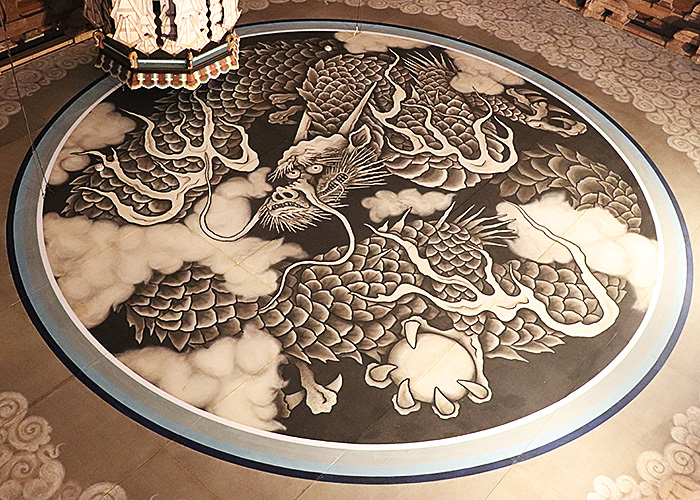
The ceiling paintings in the Hatto Hall of Kenchoji Temple, created by the painter Junsaku Koizumi, who resided in Juniso, Kamakura.
Junsaku Koizumi was a painter who studied under Yamamoto Kyujin, yet he remained untouched by the so-called art world, truly a solitary artist. He painted still lifes of flowers and vegetables, and landscapes of mountains and seas, sometimes using ink wash painting.
Generally speaking, the paintings are dark and certainly not easy on the eye, but they possess a profound and deep spirituality. They are the kind of paintings that gradually draw you in with their charm the longer you gaze at them.
He is also famous as the painter of the “Double Dragons” ceiling painting in the Hatto Hall of Kenninji Temple in Kyoto.
Engakuji Temple “White Dragon Painting”
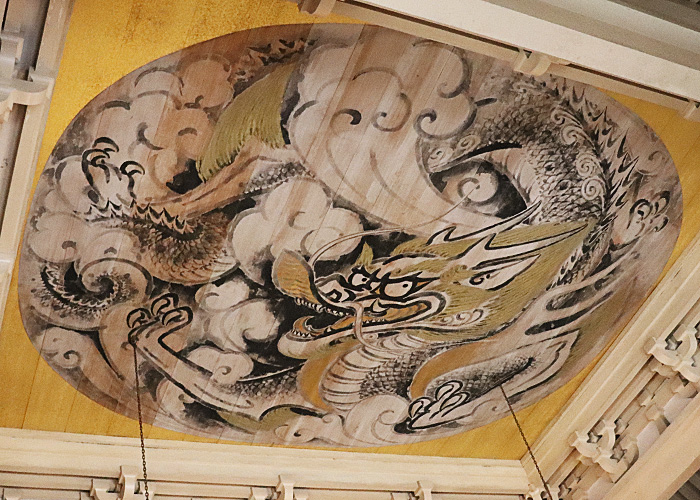
This is the White Dragon, supervised by Maeda Seison and painted by Tadashi Moriya. It is a ceiling painting in the Buddha Hall of Engakuji Temple.
Maeda and Moriya were master and disciple. They were also painters who lived together in Kamakura.
Maeda Seison is a renowned master of historical painting. His “Yoritomo in the Cave” is exceptionally famous. Other works include “Miura Daisuke,” “Daimotsuura,” “Portrait of Lady Garasha Hosokawa,” and “Dissection.” Some were painted after he turned eighty. As if age held no sway over this artist, he produced paintings that are awe-inspiring, majestic, dignified, or splendidly ornate.
Tadashi Moriya is also one of the leading Japanese painters of historical subjects, having produced numerous masterpieces underpinned by his profound erudition. Among these, his most famous work is “Decorative Sutras of the Taira Family,” an exceptionally fine piece both in composition and coloration.
This painter, who deeply loved Kamakura, also created numerous splendid historical paintings related to Kamakura. Examples include “Listening to the Tale (Hojo Masako)” and “Kamakura Udaijin Sanetomo.”
Personally, though it's not a historical painting, I love the work titled “Year After Year (Kamakurayama)” as a piece featuring Kamakura as its subject. It combines the cherry blossoms of Kamakurayama with a bright red Porsche. While seemingly eccentric at first glance, the placement of the Porsche amidst the fallen cherry blossoms perfectly captures the essence of Kamakurayama. The car's body blends mysteriously into the scene, making it a masterpiece imbued with gentle poetic sentiment.
Jorakuji Temple “Cloud Dragon Painting”
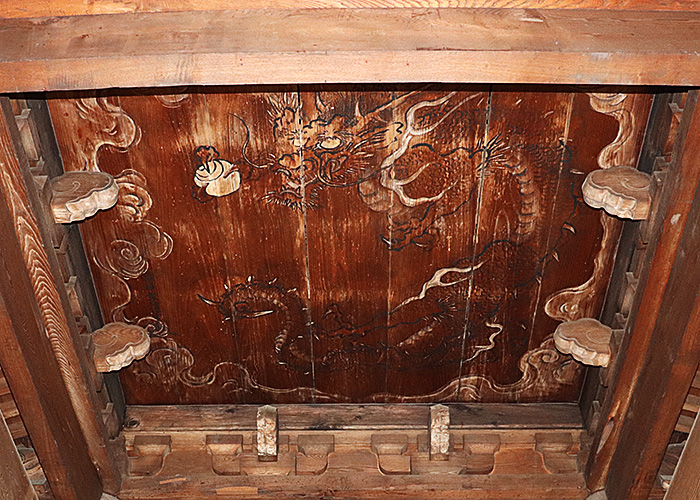
This is a ceiling painting in the Buddha Hall. It is attributed to Kano Yukinobu. This artist is said to be the daughter of Kusumi Morikage, who painted my favorite work, the “Family enjoying the evening cool” (a National Treasure).
This dragon painting has an anecdote. The dragon depicted here would go out every night to drink water. Each time, the temple hall would creak loudly, troubling the temple staff. So they painted over the dragon's eyes to keep it from going out, and the noise stopped. Indeed, if you look closely at the dragon's eyes, you can see traces of where they were painted over.
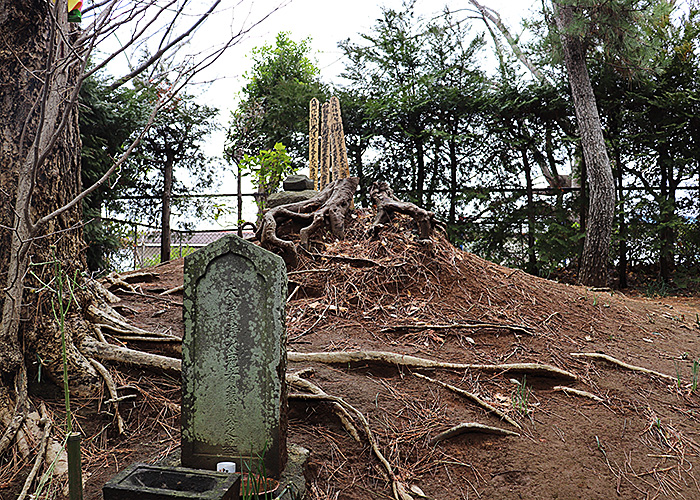
Jorakuji Temple houses the grave of the renowned regent Hojo Yasutoki, while the rear mountain holds the grave of Kiso Yoshitaka. The lives of these two men truly form a pair of light and shadow.
Yoshitaka's misfortune brought misfortune upon Ohime, the eldest daughter of Minamoto Yoritomo, and further spread to bring misfortune upon Hojo Masako.
When you think about it, Hojo Masako was a truly pitiable woman. Though she was called the “Nun Shogun,” she outlived all her children, starting with Yoriie. Could there be any greater misfortune?
The Three Great Bells of Kamakura
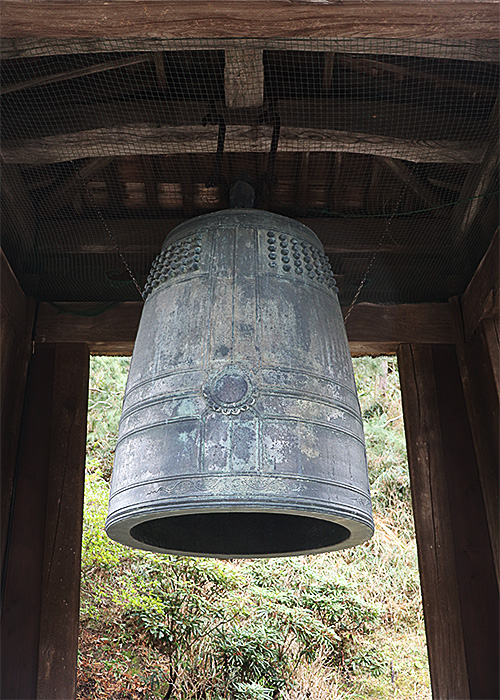
Incidentally, there are also the “Three Great Bells of Kamakura,” which refer to the temple bells of Jorakuji, Kenchoji, and Engakuji. Among these, the bells of Kenchoji and Engakuji are designated National Treasures. The bell of Jorakuji is designated an Important Cultural Property of Japan, and this bell is currently on display at the Kamakura Museum of National Treasures.
Please be sure to view the bell along with the dragon paintings.
The Turtle Painting of Enoshima
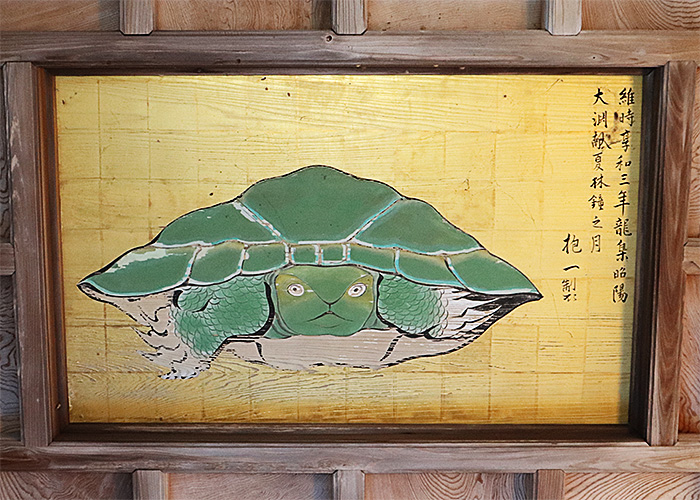
As a bonus, I'll briefly introduce the “Turtle Painting” at Enoshima Shrine on Enoshima Island. This painting is also a ceiling painting.
Would you believe it? It's said to be painted by none other than the great master of the Rinpa school, Sakai Hoitsu.
The original is reportedly kept at the Eshima Shrine office to protect it from damage by sea winds. The image above is a restored painting created by the Japanese painter Kataoka Kayo.
It's said to be drawn so that your gaze meets no matter where you look, so please give it a try.
A Guide to Easy-to-Read Books on Kamakura
The books below, produced by Lab Deep in Kamakura, provides an accessible introduction to Kamakura from a variety of perspectives.
“The Key to Kamakura” Author:Hisashi Toda
Kamakura is like a green box. Open its lid with the key and explore what's inside! You'll find many stories inside.
This book is an introductory guide to Kamakura. Nevertheless, it reveals Kamakura's multifaceted, mosaic-like nature.
It is an in-depth sightseeing guidebook, and we have included as many photos as possible, making them easy to view.
Table of Contents:
1. Middle Ages
2. Boundary Points
3. Yoritomo (源頼朝)
4. Sanetomo (源実朝)
5. The Great Buddha (大仏)
6. Author
7. Abutsuni (阿仏尼)
8. Yasujirō Ozu (小津 安二郎)
9. Actress
10. Sea
11. Enoshima (江の島)
12. Gardens
If you are considering a purchase, please click the button below.
“KAMAKURA” Author:Yone Noguchi
This is a guidebook to Kamakura by Yone Noguchi(野口米次郎), one of Japan's greatest heroes. However, unlike ordinary guidebooks, it reveals the true face of Kamakura: a city of silence, history, and Buddhism.
Table of Contents:
BY THE ENGAKUJI TEMPLE
THE TEMPLE OF SILENCE
A LEGEND OF THE BUDDHA'S TOOTH
BY A BUDDHA TEMPLE
UNDISCOVERED KAMAKURA
THE WONDER OF BRONZE
BY THE DAIBUTSU AT KAMAKURA
NICHIREN
THE HACHIMAN SHRINE
ENOSHIMA
If you are considering a purchase, please click the button below.
Lab Deep in Kamakura Juei Masuda